
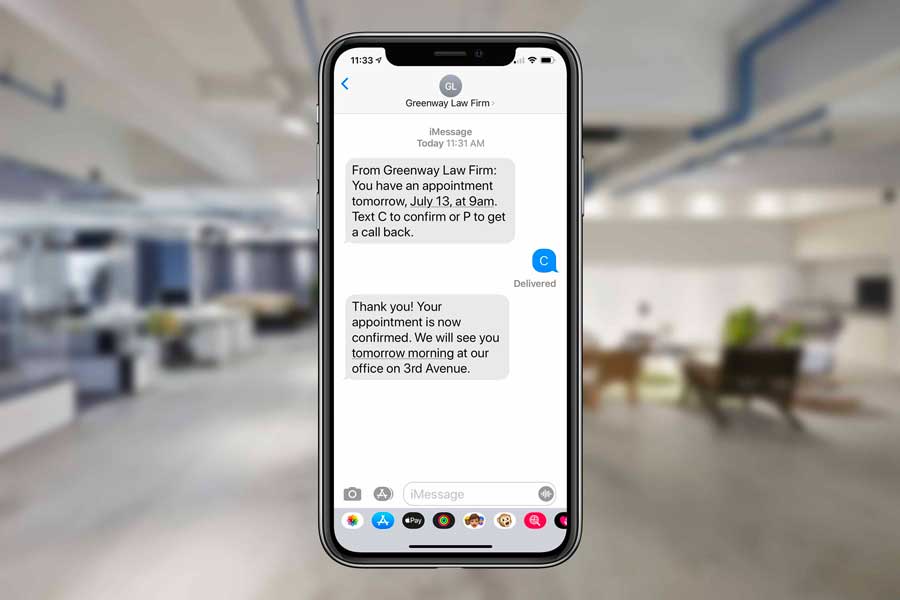
ClientPing manages your appointment reminders and review requests. Once connected, your clients will receive text messages confirming their appointments, and if you choose, review requests for public Google, Facebook, and Avvo reviews, as well as other sites.
Register for a ClientPing account here. Once you have a ClientPing account, you'll be prompted to connect your Clio, Google, Outlook, Hotmail, or Office 365 calendar. We've designed ClientPing to be easy to set up even if you're not a technical person: it steps you through a few short questions, and you'll be ready to go.
For Google Calendar and Outlook, put the client's phone number, including the area code, in the appointment title. For Clio, link the appointment to a matter whose client has a primary phone number; ClientPing uses that number rather than a number in the title. You keep scheduling in your normal calendar. ClientPing watches for appointments that match your reminder rules and sends the messages you've configured. If calendar updates are enabled, it adds "REMINDED:" to the title after sending a reminder. The default reminder gives your firm's name and the appointment date and time; it does not include the appointment title.
When your clients receive a text, they'll be prompted to text back YES or NO to confirm the appointment. If your client texts back YES, they'll get a thank-you message, and the start of the appointment's title in your calendar changes to "CONFIRMED:". If they text back NO, the title starts with "DECLINED:" instead, and you'll get an email alert with the appointment and client details so you can contact them to reschedule. If a client replies with anything beyond a simple yes or no, you'll get their message by email right away.
You can also turn on automatic rescheduling to allow declining clients to choose a new spot for their meeting. At setup, you'll enter the time slots clients are allowed to move appointments to. When a client declines, they get a link to reschedule. The link opens a calendar of your available times, which takes into account both the availability you set and what's already on your calendar, so clients only see slots that are actually open. When a client picks a slot, the appointment moves to that time on your calendar, and you get an email with the details.
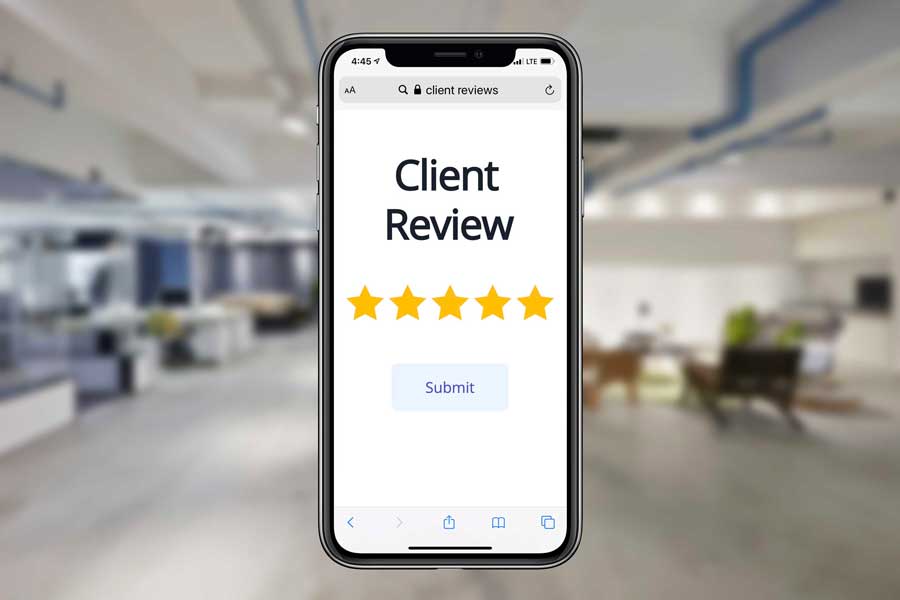
You can also turn on review requests to collect more reviews on Google, Facebook, Avvo, Lawyers.com and other sites. Google says that more reviews and positive ratings can help your business's local ranking (Google Business Profile Help, checked October 2026). Click to turn this on and choose when the messages go out. For example, you might send clients a review request seven days after the appointment. They'll get a text, an email or both, thanking them for their business and asking them to review you or your firm, with links to your review pages.
Review requests can count as marketing messages, so get your clients' written consent before you send them by text. If you're a Repsight for Attorneys client, you can put your Repsight review link in the message and let Repsight handle the follow-ups. Click here for more information.
If you have multiple calendars, or your firm has more than one attorney or employee, you can add their calendars to ClientPing too. Each added calendar has its own settings, messages, and notifications, and runs independently of the others.
You can customize the text messages and emails ClientPing sends for your business. By default, they'll start with your business name, let the client know the date and time of their upcoming appointment, and ask them to text back "YES" to confirm or "NO" to decline.
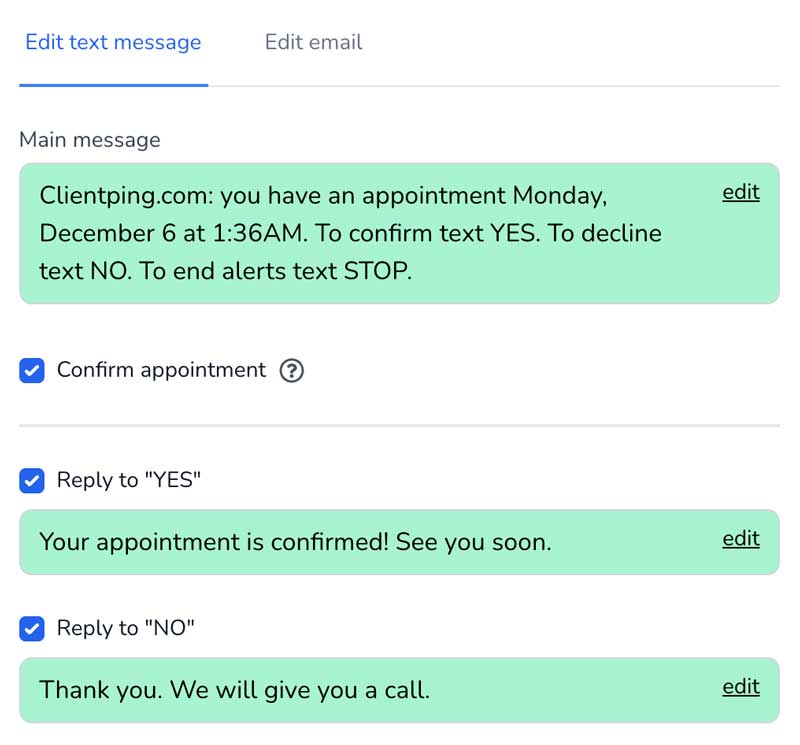
You can have as many types of messages as you like. For example, you can tell ClientPing to watch appointment titles for *court (the word "court" preceded by an asterisk) and send a different message letting the client know the appointment is in court rather than at your office. A guide to adding and customizing messages is here.
You can turn on client scheduling, and after setting your available times, you'll be provided with a link you can email to your clients or put on your web page. This link leads to your own scheduling page, which you can customize with your own details and logo. You'll also set the meeting types and lengths your clients are able to schedule. When a client chooses to schedule a meeting, the calendar event is automatically created and you are sent an email notification with the meeting and client details.